Creating an inviting outdoor space can be a game-changer for your home. With warmer months approaching, I found myself daydreaming about cozy gatherings and relaxing afternoons spent outside. An outdoor rug on top of grass can elevate your garden or patio, adding a splash of comfort and style. I wanted to bring together some clever tips to help you set it up perfectly, ensuring that your outdoor oasis is both functional and aesthetically pleasing.
If you’re someone who loves outdoor decor, gardening, or simply enjoys spending time in your yard, this post is crafted for you. Whether you’re redesigning your patio or just looking to spruce up your lawn, you’ll discover practical strategies that make setting up an outdoor rug a breeze. From choosing the right materials to maintaining the rug throughout the seasons, I’ve compiled nine essential tips to help you create an inviting outdoor living space that reflects your personal style.
By the end of this post, you’ll feel equipped with actionable advice that transforms your yard into a stylish retreat. You’ll learn how to select the perfect rug, maintain it efficiently, and enhance your outdoor decor with eye-catching elements. Let’s dive in and explore how to make your outdoor rug setup as smart and chic as possible!
Key Takeaways
– Choose the Right Material: Select materials like polypropylene or polyester that withstand outdoor conditions while being easy to clean.
– Secure the Edges: Avoid tripping hazards by using weights or stakes to keep the edges of the rug flat against the grass.
– Create a Level Base: Ensure your rug lies flat by clearing away debris and leveling the surface underneath.
– Regular Maintenance is Key: Clean your outdoor rug regularly to prevent mold and mildew, and store it properly during harsh weather.
– Embrace Color and Patterns: Choose vibrant colors and bold patterns to add personality to your outdoor space, making it a delightful retreat.
1. Choose the Right Material
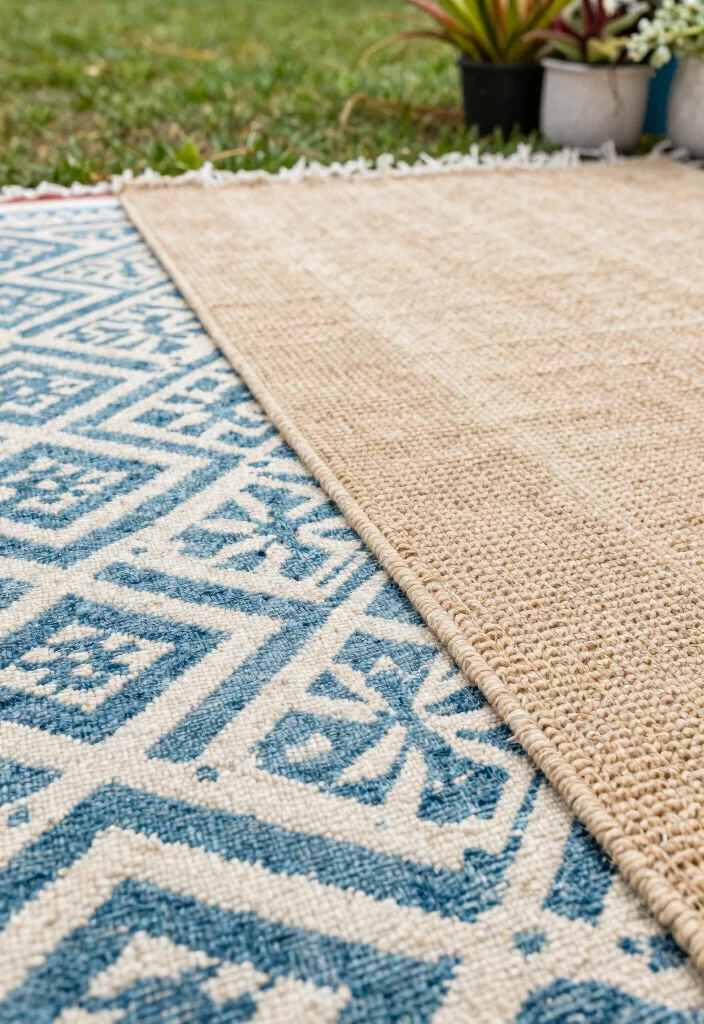
Finding the perfect material for your outdoor rug is essential for both durability and ease of care. Look for synthetic fibers that resist fading and moisture, such as polypropylene, which is known for its strength and easy cleaning. These materials are crafted to endure the outdoor elements, making them ideal for placement on grass where they might get wet or muddy.
Start by choosing fabrics that are UV-resistant to keep colors vibrant. Look for waterproof options to handle unexpected rain, and consider a flat weave design for a better fit on grassy surfaces.
Selecting the right material means your rug will withstand the test of time, allowing you to enjoy your outdoor oasis without worry!
2. Secure the Edges
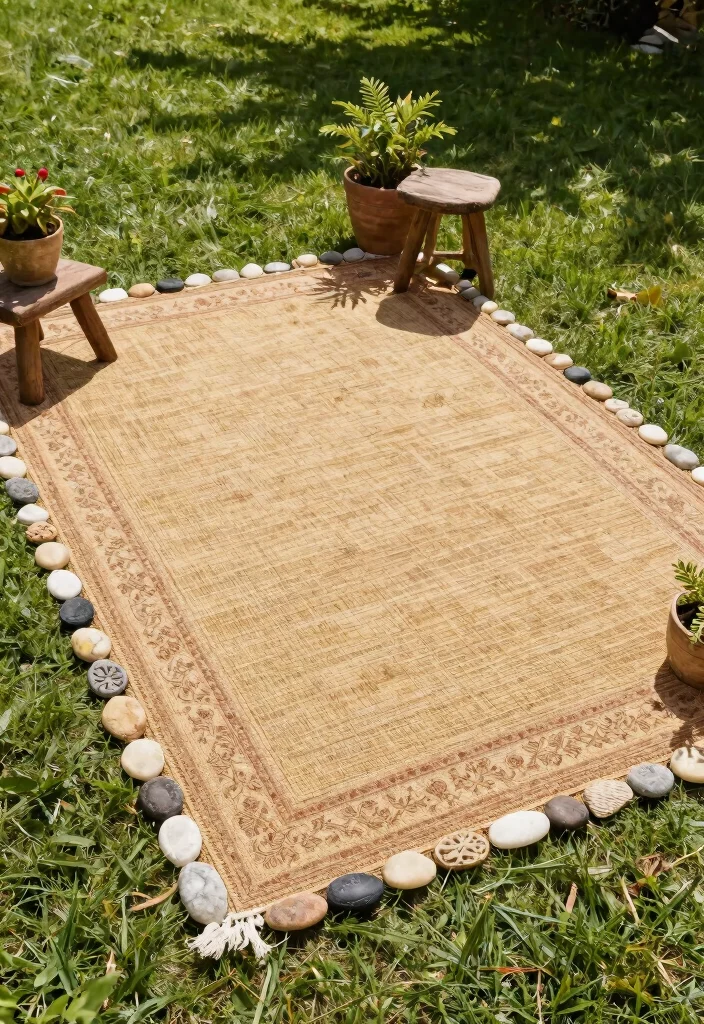
Preventing your outdoor rug from curling or shifting is key for both safety and looks. Use outdoor rug stakes or heavy objects to keep the edges flat against the grass. This enhances the overall aesthetic and provides a safe, stable area for walking or lounging.
Try using heavy stones at the corners to secure your rug. Purchase rug stakes specifically designed for grass, or place some furniture on the rug to add weight and create a cozy vibe.
By effectively securing the edges, you maintain a tidy appearance and reduce trip hazards, making your outdoor space more enjoyable.
3. Create a Level Base
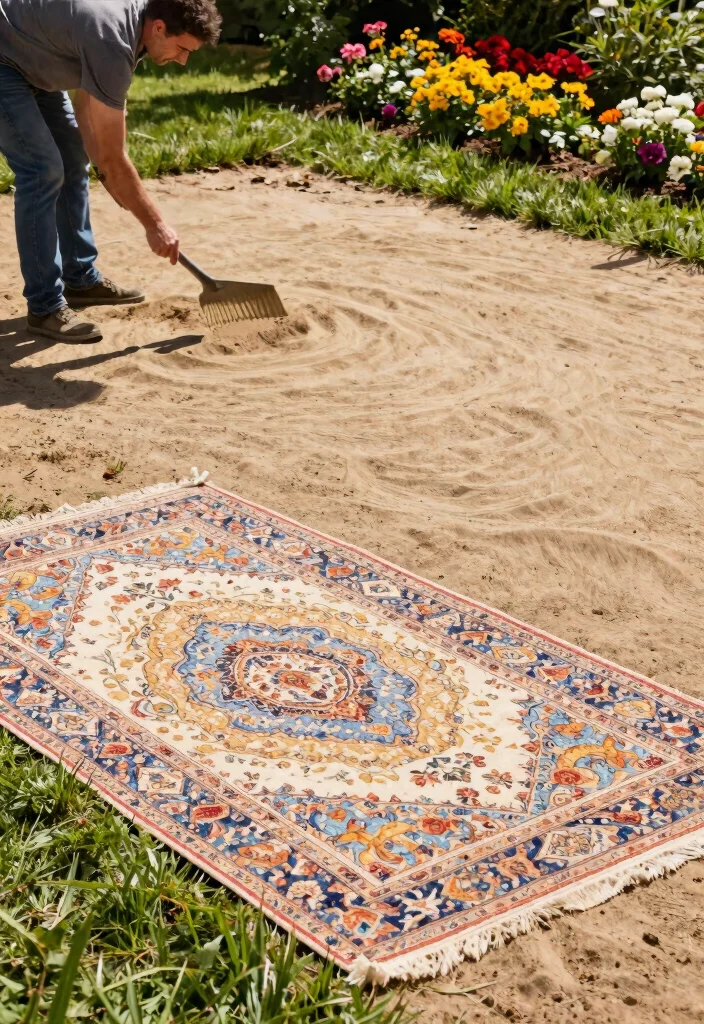
An uneven ground can disrupt the placement of your outdoor rug. To achieve a level setup, clear the area of debris, rocks, and grass clumps. If the surface is too uneven, consider adding a base layer of sand or mulch beneath the rug for a smoother foundation.
Start by removing all debris and rocks from the rug area. Lay down a thin layer of sand for a flatter surface, or use a mat underneath for extra stability.
Creating a stable base not only enhances the rug’s appearance but also ensures safety for users of all ages.
4. Utilize Outdoor Rug Pads
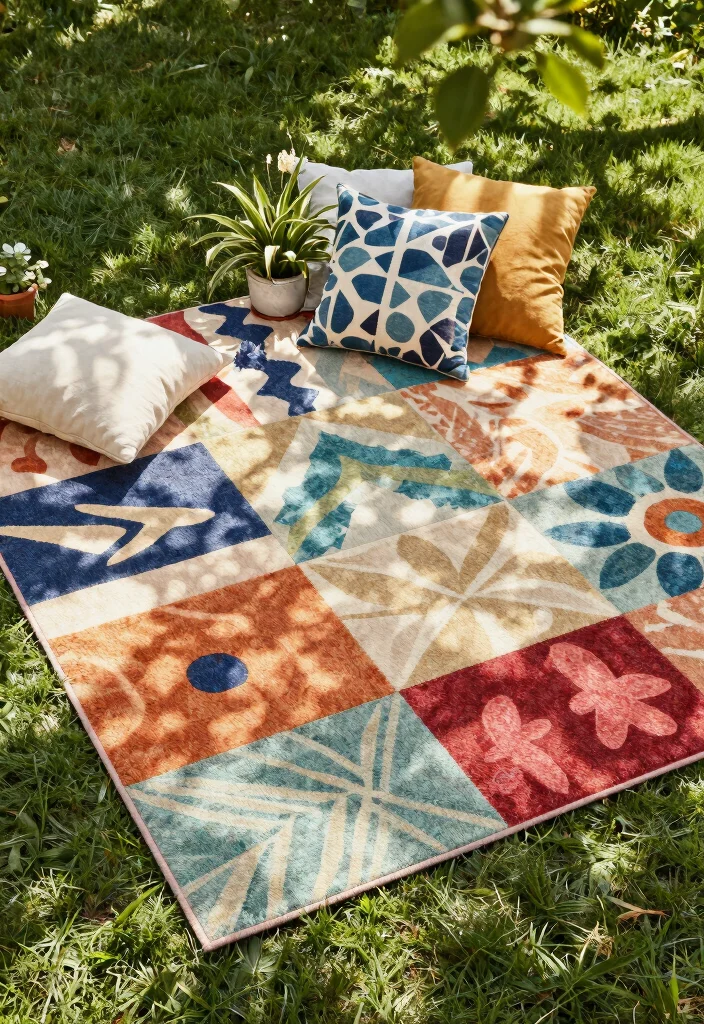
Incorporating a rug pad can significantly improve your outdoor rug setup. It provides cushioning, prevents slipping, and allows the rug to breathe, which is vital for outdoor conditions. A quality outdoor rug pad adds an extra layer of protection against moisture.
Make sure to use a rug pad that prevents slipping and shifting for safety. Choose one that allows air circulation to combat mold and mildew. Additionally, select a pad that offers cushioning for a more comfortable feel underfoot.
Investing in a high-quality outdoor rug pad is a small step that enhances the durability and functionality of your outdoor rug.
Fun fact: An outdoor rug pad under your outdoor rug on top of grass can reduce slipping by up to 80%. It also improves air circulation to cut moisture buildup and extend rug life, keeping your space safer and more inviting.
Ongoing Maintenance & Care Guide
Maintaining your outdoor rug on top of grass ensures it stays vibrant and functional for years to come. Here’s a practical guide to help you keep it in excellent condition.
Maintenance Schedule:
Daily/Weekly Tasks:
– Brush Off Debris: Use a broom or a soft brush to remove dirt and leaves. This takes about 5-10 minutes.
– Check for Moisture: Make sure the rug isn’t overly wet, especially after rain. Look for puddles or soggy areas. This check should take about 5 minutes.
– Adjust Edges: Tuck in any parts of the rug that may have lifted. This should take 5 minutes.
Monthly/Seasonal Tasks:
– Deep Clean: Every month, wash your rug with mild soap and water. Scrub gently using a soft brush. This process takes about 30-45 minutes.
– Inspection for Damage: Look for frays or signs of wear. Repair any damages immediately, which could take 10-20 minutes.
– Reposition if Needed: Check if the rug is still level and stable. Adjust its position if it’s shifting. This should take around 10 minutes.
– Check for Mold: Look for any signs of mold growth, especially in humid months. This search takes about 5-10 minutes.
– Adjust for Seasonal Changes: As seasons change, consider whether you need a thicker or lighter rug. This reassessment should take 10 minutes.
Maintenance Summary Table:
| Task | Frequency | Difficulty | Time Needed |
|——————————|————|————-|——————–|
| Brush Off Debris | Daily | Easy | 5-10 minutes |
| Check for Moisture | Daily | Easy | 5 minutes |
| Adjust Edges | Daily | Easy | 5 minutes |
| Deep Clean | Monthly | Moderate | 30-45 minutes |
| Inspection for Damage | Monthly | Moderate | 10-20 minutes |
| Reposition if Needed | Monthly | Easy | 10 minutes |
| Check for Mold | Monthly | Easy | 5-10 minutes |
| Adjust for Seasonal Changes | Seasonal | Easy | 10 minutes |
Common Issues to Watch For:
⚠️ Fading Colors: If you notice colors fading, it means the rug is exposed to too much sun. This can degrade its quality over time.
⚠️ Mold or Mildew: If you see dark spots, that’s a sign of mold. This could lead to health issues and requires immediate cleaning.
⚠️ Fraying Edges: If the edges are starting to fray, it means the rug isn’t secured well. It needs better anchoring or replacement.
⚠️ Unpleasant Odors: Bad smells indicate moisture buildup. Address it promptly to avoid mold and mildew problems.
⚠️ Warping or Buckling: If the rug is not lying flat, it may need repositioning. This can prevent tripping hazards and keep it looking neat.
Care Tips:
💡 Protect from Direct Sunlight: Use a UV-protectant spray designed for outdoor fabrics. This can help prevent fading and damage over time.
💡 Rotate Your Rug: Changing its position every few months can help it wear evenly. This protects it from sun exposure on one side.
💡 Store During Winter: If you live in a snowy area, store your rug indoors during winter. This prevents damage from ice and snow.
💡 Use a Rug Pad: A rug pad can help protect the bottom of your rug and provide better traction. It keeps the rug from slipping or bunching up.
💡 Promptly Address Spills: Clean up any spills immediately. Use a cloth to blot rather than wipe, which can spread the stain.
Following this ongoing maintenance and care guide will help ensure your outdoor rug on top of grass remains beautiful and functional. With just a little effort each week and month, you can enjoy your outdoor living space to the fullest!
5. Choose a Suitable Size
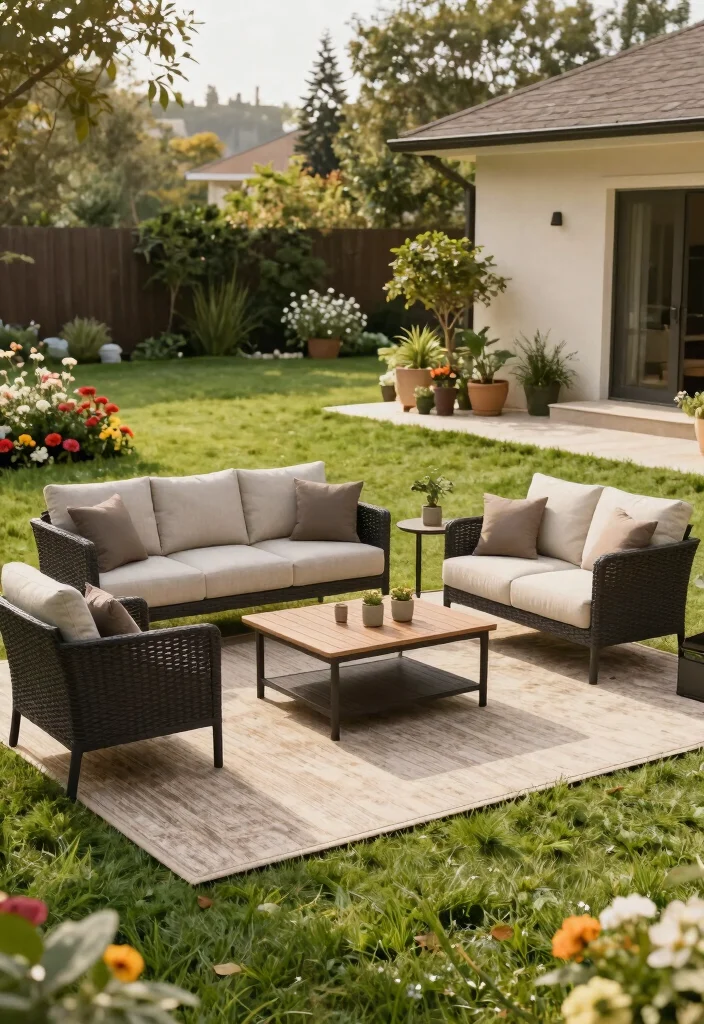
Selecting the right size for your outdoor rug is crucial! A rug that’s too small can leave the area feeling disconnected, while an oversized one might overwhelm the space. Aim for a size that accommodates at least the front legs of your outdoor furniture to create a cohesive look.
Measure your outdoor seating area to find the right dimensions. Ensure there’s space around the rug for visual flow and easy movement. Think about your furniture arrangement as it should complement the rug size.
A well-sized rug can elevate your outdoor decor, encouraging family and friends to gather and enjoy your outdoor area.
Fun fact: An outdoor rug on top of grass that’s properly sized can boost visual flow by up to 25%. Measure your seating area so the rug fits under the front legs of chairs, leaving space for easy movement. A well-proportioned rug pulls the whole patio together.
6. Regular Maintenance is Key
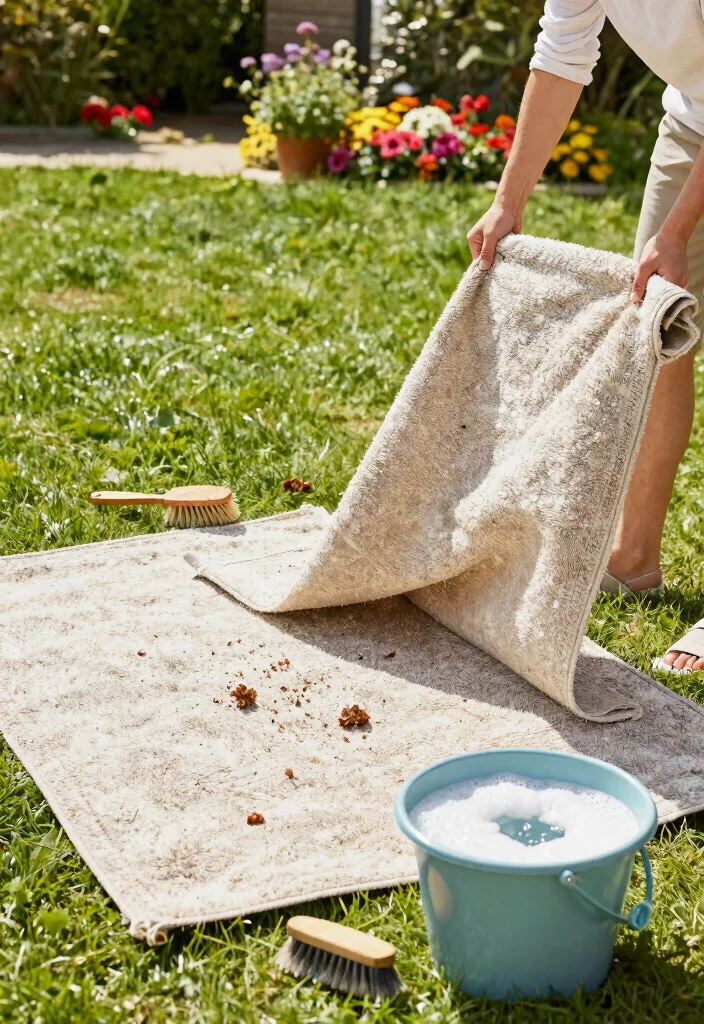
Keeping your outdoor rug well-maintained is essential for its appearance and longevity. Regular cleaning prevents dirt buildup and mildew. Depending on the material, you can usually shake it out, hose it down, or wash it with a mild soap solution.
Shake out dirt and debris weekly for easy upkeep. Use a soft bristle brush for tougher stains. If the rug gets wet, ensure it dries completely to avoid mold growth.
Simple maintenance keeps your outdoor rug looking fresh, ensuring your outdoor space remains beautiful all year long.
7. Consider Seasonal Changes
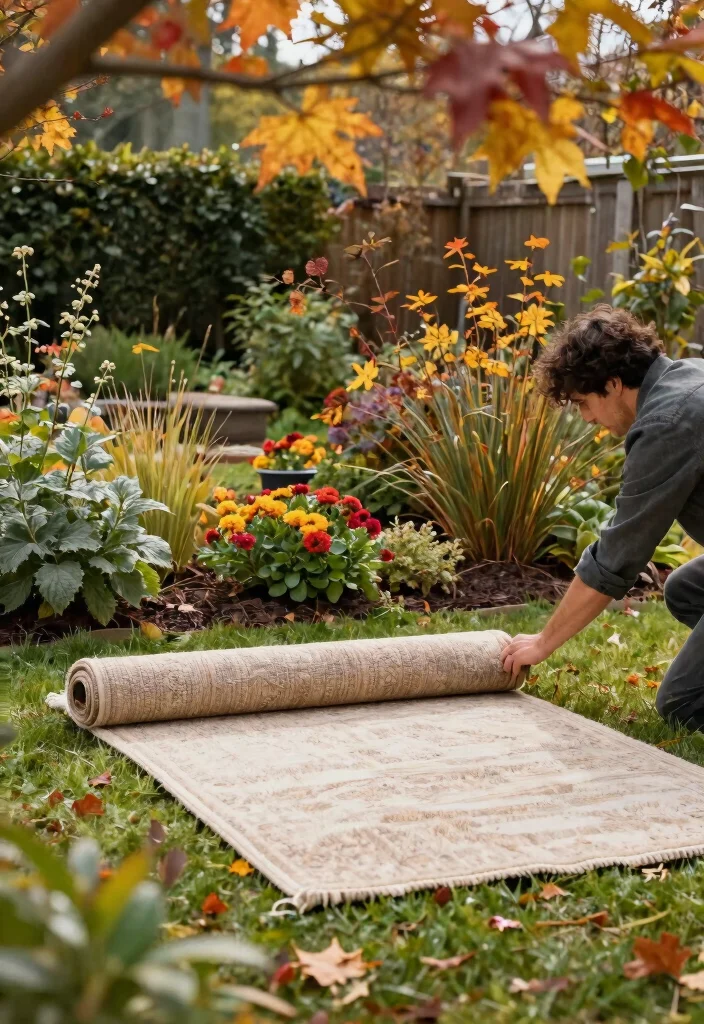
Outdoor rugs can be affected by seasonal shifts, from rain to snow. During harsh weather, it’s wise to roll up and store your rug to extend its life. Alternatively, you might want to choose a more durable rug for the winter months that can better withstand the elements.
Store your rug during heavy rain or snow to prevent damage. Opt for seasonal rugs that can handle various weather conditions. Always clean and dry the rug before putting it away for winter.
By adjusting your rug care for the seasons, you can maintain a beautiful outdoor space year-round.
8. Add Decorative Elements

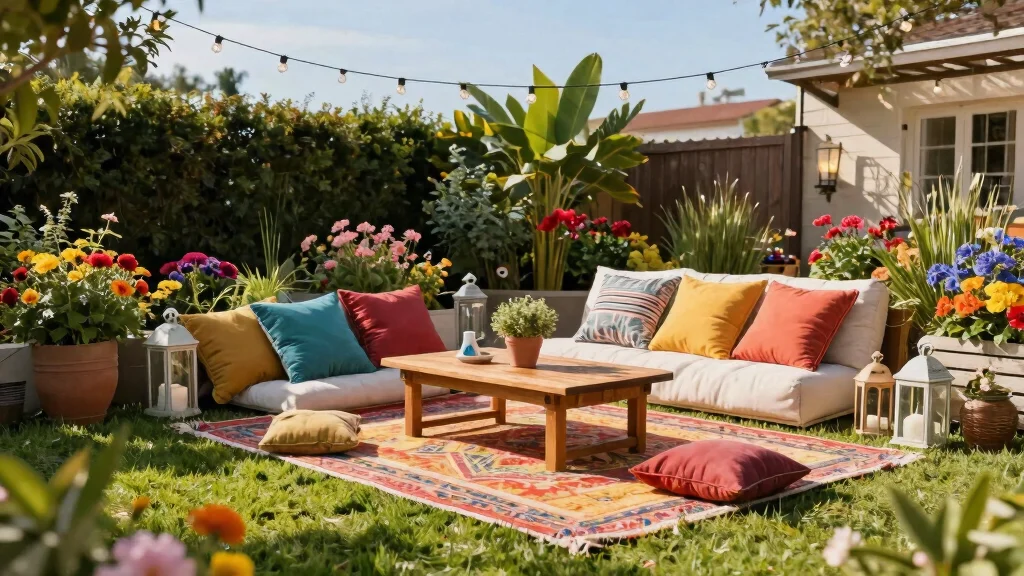
Enhance your outdoor rug setup by adding decorative elements that complement its design. Incorporate throw pillows, poufs, or a stylish outdoor coffee table to bring comfort and character to the area. Outdoor lanterns or string lights can create a warm atmosphere, making evening gatherings more inviting.
Mix and match throw pillows in colors that match your rug. Add a pouf for extra seating or a footrest. Use decorative lanterns to enhance the ambiance at night.
These small touches can turn your outdoor rug into the centerpiece of your outdoor living space, inviting relaxation and enjoyment.
Fun fact: A well-styled outdoor rug on top of grass with two coordinated throw pillows and a pouf can triple seating options in minutes. Soft lanterns or string lights extend usable time by 2 hours, making evenings instantly cozy.
9. Embrace Color and Patterns
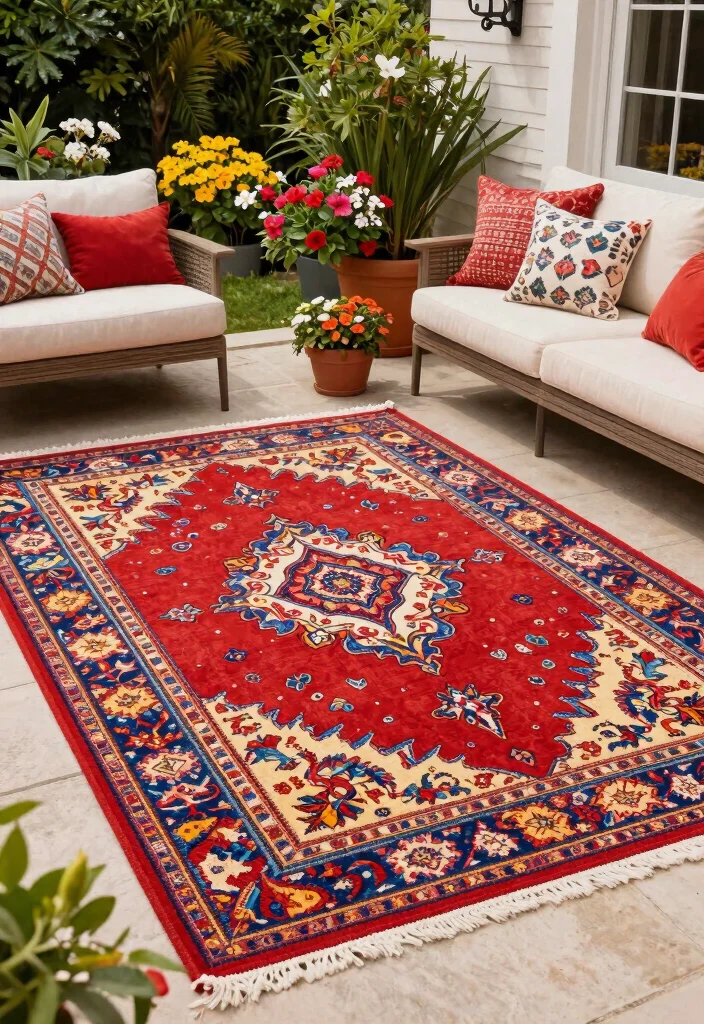
Choosing an outdoor rug with bold colors and patterns can serve as the focal point of your outdoor space. Vibrant designs can uplift the overall atmosphere, making it feel lively and inviting. Select patterns that resonate with your style and harmonize with your existing decor.
Consider the colors in your garden or patio to find a rug that matches or contrasts beautifully. Patterns like stripes, florals, or geometric shapes can add visual interest. Use rugs to establish a theme for your outdoor area, whether it’s coastal, boho, or modern.
Embracing color and patterns transforms your outdoor environment, making it an extension of your home.
Conclusion
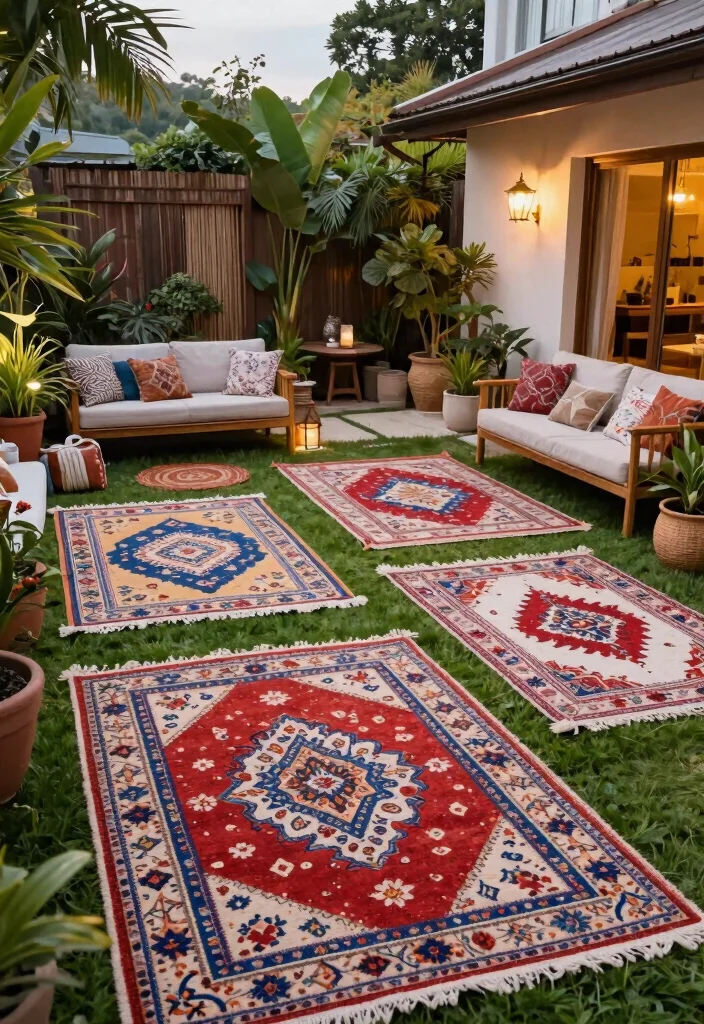
Creating a beautiful outdoor setup with rugs can truly transform your garden into a welcoming haven. By following these clever tips, you’ll not only enhance the visual appeal of your space but also ensure that your outdoor living area is functional and inviting. Don’t be afraid to experiment with different styles, colors, and decorations to make it truly yours.
Start enjoying the great outdoors in style, and let your garden reflect your personality!
Note: We aim to provide accurate product links, but some may occasionally expire or become unavailable. If this happens, please search directly on Amazon for the product or a suitable alternative.
This post contains Amazon affiliate links, meaning we may earn a small commission if you purchase through our links, at no extra cost to you.
Frequently Asked Questions
What is the best way to set up an outdoor rug on top of grass without damaging the lawn or making it slippery?
Best practice starts with a dry, flat patch of grass.
Use a breathable underlay or landscape fabric to prevent moisture buildup under the rug.
Secure corners with lawn-friendly stakes or place sturdy furniture around the edges to keep it from sliding.
For extra stability, you can lay flat deck tiles or thin pavers under the rug edges so the rug doesn’t sink into soft ground.
Avoid watering directly underneath and lift the rug periodically to check for uneven spots.
This setup is ideal for an outdoor rug on top of grass, helping your outdoor decor stay coordinated with your garden accessories and keeping lawn maintenance simple while your outdoor living space looks polished.
What underlayment or accessories help the outdoor rug on top of grass stay flat and neat?
Try a breathable underlay designed for grass and pair it with non-slip gripper pads or lawn stakes to secure the outdoor rug on top of grass.
For extra security, tuck the corners under landscape pins or place a few thin deck tiles or pavers at the rug edges.
Choose a rug with UV-resistant dye and a tight weave to resist wear.
Keep the area dry after rain to reduce slipping and mold, which helps with lawn maintenance long-term.
Doing these steps helps your outdoor decor and other garden accessories look coordinated while achieving a clean patio design.
How do I choose outdoor decor and garden accessories to complement a rug on grass for patio design and lawn maintenance?
To pick the right outdoor decor and garden accessories to go with a rug on grass, start with your style and space: casual, modern, or boho, then choose a rug color and pattern that coordinates with existing planters and furniture.
Pick weather-resistant materials like teak, metal, or resin to match the rug and keep upkeep minimal.
Layer in garden accessories such as planters, lanterns, and cushions to create zones for outdoor living.
Plan the layout so you’re not covering too much grass, and keep an eye on lawn maintenance—aerate, trim, and spot-clean as needed—to maintain a fresh patio design.
What lawn maintenance tips should I follow when I place an outdoor rug on top of grass year-round?
Follow these lawn maintenance tips when you place an outdoor rug on top of grass year-round.
Avoid leaving it soaking wet; lift it during heavy rain and dry thoroughly before re‑laying.
Move or rotate the rug every few weeks to prevent patchy wear and soil compaction.
Trim the grass around edges so the rug sits flush, and keep the underside clean to prevent mold buildup.
Store the rug in a dry place during off‑season.
With these habits, your setup stays neat while your outdoor living space stays inviting.
How can an outdoor rug on top of grass elevate outdoor living and patio design, and how do I care for it to last?
An outdoor rug on top of grass instantly defines a cozy outdoor living zone, adds color and texture, and softens hard surfaces for a more inviting patio design. To care for it long-term: choose a weather-proof or mold-resistant material, vacuum or shake weekly, and spot-clean spills with mild soap. Give it a sunny, breezy dry between uses to prevent mildew, and rotate its position to even out wear. When severe weather threatens, roll it up or store it to preserve color and shape while keeping your outdoor decor and other garden accessories looking sharp.