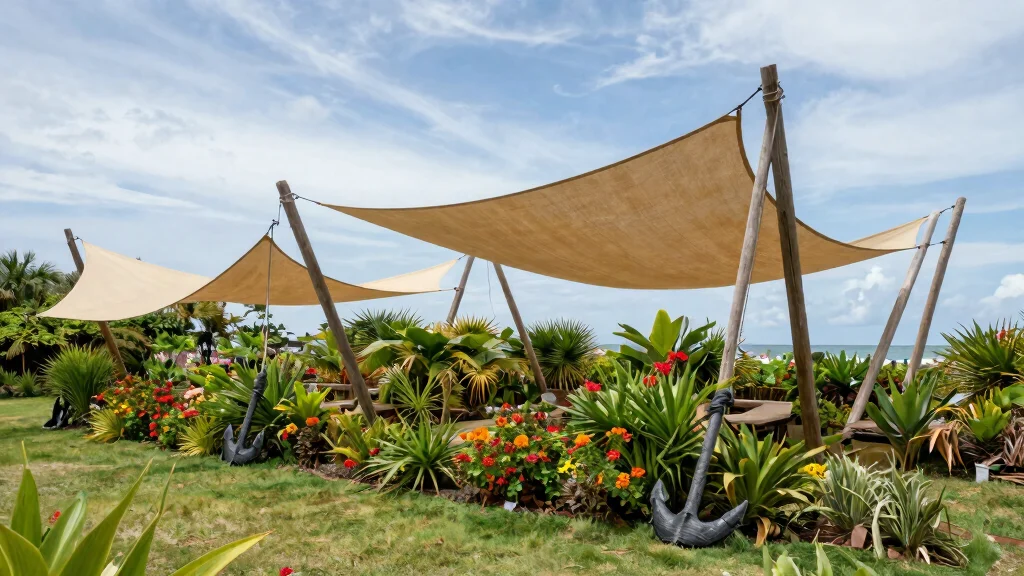
Shade sails can transform your outdoor space, offering a stylish solution to keep your garden cool and comfortable. However, if you live in high wind areas, securing those sails becomes crucial. I created this post to help you avoid the frustration of a torn shade sail on a blustery day. It’s all about giving you the best tips and tricks for keeping your shade sails anchored firmly, even when Mother Nature throws her worst at you.
If you’re a gardening enthusiast who loves enjoying your outdoor oasis without the hassle of heat or wind, this post is for you. Whether you’re looking to create a cozy spot for relaxation or a shaded area for your plants, securing your shade sails effectively is essential. I’ve rounded up 9 practical and effective shade sail anchor ideas specifically tailored for high wind areas. These ideas will keep your outdoor space enjoyable and your shade sails where they belong.
You’ll discover various options, from DIY methods to more robust solutions, ensuring you find the perfect fit for your garden. With these insights, you’ll have the confidence to install your shade sail and enjoy your garden all summer long, knowing it’s secure against the wind.
Key Takeaways
– Understand the Risks: High winds can easily damage unsecured shade sails, so it’s important to have a solid anchoring plan in place.
– Explore Durable Options: Heavy-duty solutions like concrete blocks and anchor plates will provide stability against strong gusts.
– Consider Unique Anchors: Creative ideas, such as using recycled tires or custom-made frames, can enhance your garden’s aesthetic while securing your sails.
– Temporary Solutions: If you need a more flexible approach, options like water weights can be effective for seasonal installations.
– Incorporate Nature: Using climbing plants as natural supports not only anchors your sails but also adds beauty to your garden space.
1. Heavy-Duty Concrete Blocks

When high winds threaten your outdoor space, heavy-duty concrete blocks stand as a reliable anchor option. These blocks offer a sturdy foundation that remains stable during unpredictable weather. Their hefty nature keeps your shade sail taut, ensuring it provides effective coverage against the elements.
To maximize their effectiveness, consider selecting blocks with a smooth finish to avoid wear on your sail fabric. If necessary, stack multiple blocks to enhance stability. You can also paint them in vibrant colors or add decorative elements to integrate them harmoniously into your garden design.
Concrete blocks are a long-lasting investment that guarantees your shade sails stay secure, making them ideal for coastal settings.
2. Anchor Plates and Screws

For a more permanent solution, anchor plates and screws provide exceptional support for your shade sail. These robust metal plates can be securely fastened to either concrete or wooden surfaces, ensuring they resist high winds effectively. When setting them up, ensure screws penetrate deeply for optimal stability.
These anchors offer numerous benefits: enjoy stability with minimal movement during strong gusts, conceal anchor plates beneath decorative elements or plants for a sleek look, and easily adjust them if you decide to change your layout.
When installed correctly, anchor plates help maintain your garden’s aesthetic while providing dependable support.
3. Steel Cables and Turnbuckles

Using steel cables along with turnbuckles creates a dynamic tensioning system that withstands wind forces effectively. This setup allows you to adjust the tightness of your shade sail, giving you flexibility as weather conditions change.
Ensure you choose high-grade stainless steel cables to prevent rusting and mount turnbuckles securely to robust posts or walls for maximum effectiveness. Regularly check the system for wear and tear, especially after storms, to maintain its reliability.
This combination not only looks sleek but also promises strength and durability throughout your gardening season.
Fun fact: in coastal yards, shade sail anchor ideas using steel cables and turnbuckles can increase wind resistance by up to 40%. Tighten gradually and check for rust every season. High-grade stainless cables help prevent corrosion and keep sails secure.
4. Ground Anchors with Stakes

For challenging terrains like sandy coastal gardens, ground anchors with stakes offer an effective solution for securing shade sails. These anchors are simple to install and can be removed when not in use, making them perfect for seasonal setups.
To install, drive the stake deep into the ground for a secure grip. Then, attach your shade sail using durable straps or ropes, and regularly check for stability to ensure they remain secure.
These lightweight anchors are portable, allowing you to adjust your garden layout easily while providing excellent stability even in windy conditions.
5. Recycled Tire Weights

Embrace sustainability by using recycled tires as weights for your shade sails. These eco-friendly options are heavy and can blend seamlessly into your garden, especially when partially buried or covered with soil and plants.
To implement this idea, cut tires down to your desired weight and bury part of them for stability. Securely attach the shade sail using strong cables or ropes, and enhance the area with flowers or decorative stones for a visually appealing look.
This creative method not only anchors your sails but also adds character to your garden while being environmentally friendly.
6. Water Weights for Temporary Installations

For temporary setups or frequent garden changes, water weights are an ideal choice. These can be large bags or containers filled with water, providing a sturdy anchor without the need for permanent installation.
Water weights offer several advantages, such as easy repositioning without heavy lifting, perfect portability for events or gatherings, and a minimal footprint that allows blending with plants or decor.
Just ensure that the containers are securely closed to prevent leaks, and you’ll have a practical anchoring solution that is both versatile and functional.
7. Custom-Made Wooden Frames

Crafting custom wooden frames for your shade sails not only guarantees stability but also adds charm to your garden. These frames can be designed to fit any space while providing a rustic touch that enhances your outdoor decor.
When building, use treated lumber to withstand the elements and design the frame for easy installation and removal of the shade sail. You might also consider adding decorative elements like trellises for climbing plants or fairy lights for a whimsical ambiance.
With their sturdy construction, wooden frames serve as a focal point in your garden, blending function with style.
8. Using Climbing Plants as Natural Supports

Integrating climbing plants as natural supports for shade sails can be both aesthetically pleasing and functional. By training resilient plants like wisteria or vines to grow around posts or trellises, you can enhance strength while beautifying your garden.
To implement this, select climbing plants that thrive in your coastal environment and create a strong vertical structure for them to grow on, which also serves as an anchor for the sail. Regular maintenance will help keep the plants healthy and supportive of the shade sail.
This approach not only boosts your garden’s beauty but also harmonizes nature with structure.
❝ Climbing plants can become mighty shade sail anchors in coastal spaces—turning vines into living support structures. Train hardy varieties like wisteria around posts, then prune regularly to boost strength and longevity for your shade sail anchor ideas.
9. Heavy-Duty Bungee Cords

For a quick and effective anchoring solution, heavy-duty bungee cords are incredibly useful. They stretch to accommodate wind movements, providing a secure hold without compromising your garden’s aesthetics.
These cords have several benefits: they adjust to tension changes from the wind, minimizing stress on the sail, are easy to install by attaching them to existing anchor points, and are a budget-friendly option that maintains quality.
Bungee cords are particularly effective in windy areas, making them a valuable addition to your anchoring toolkit.
Did you know heavy-duty bungee cords can stretch to absorb wind movement up to 3x more than static ties? In coastal gardens, using these shade sail anchor ideas keeps sails secure, affordable, and nearly maintenance-free.
Key Trade-offs & Our Top Pick
When selecting the best shade sail anchor ideas, especially for high wind areas, you have several options. Each option comes with its own benefits and drawbacks. Let’s compare some of the most effective choices for your garden shade structures.
Option 1: Heavy-Duty Concrete Blocks
– Pros:
– Extremely sturdy and durable, ensuring your shade sail stays anchored even in strong winds.
– Easy to find and relatively inexpensive.
– Cons:
– Heavy and hard to move; not the best choice for temporary setups.
– May require additional aesthetics to blend in with garden decor.
– Best for: Long-term installations where stability is essential.
Option 2: Anchor Plates and Screws
– Pros:
– Provides a secure hold for your shade sail with minimal visible hardware.
– Relatively easy to install; perfect for DIY enthusiasts.
– Cons:
– May not hold as well in extremely high winds without supplemental weights.
– Requires drilling into surfaces, which may not suit all gardeners.
– Best for: Permanent shade sail setups on solid ground.
Option 3: Steel Cables and Turnbuckles
– Pros:
– Offers excellent tensioning ability, helping to keep your sail taut and secure.
– Versatile for many configurations and can be adjusted as needed.
– Cons:
– Requires some assembly and understanding of tension mechanics; not the most user-friendly for beginners.
– Could rust over time if not properly maintained.
– Best for: Experienced gardeners looking for adjustable setups.
Option 4: Ground Anchors with Stakes
– Pros:
– Easy to install and remove, making them good for temporary setups.
– Lightweight and portable, ideal if you need to move your shade sail often.
– Cons:
– May not provide enough stability in extreme weather conditions.
– Can be less aesthetically pleasing when compared to other options.
– Best for: Seasonal shade installations or for renters.
Option 5: Water Weights for Temporary Installations
– Pros:
– Simple to use; just fill with water and secure your shade sail.
– Lightweight when empty, making storage easy.
– Cons:
– Not suitable for permanent setups; can tip over in strong winds if not filled properly.
– Requires regular maintenance to ensure they remain filled and properly secured.
– Best for: Short-term events or gatherings where quick setup is needed.
Best Overall: Heavy-Duty Concrete Blocks
Heavy-duty concrete blocks stand out as the best overall choice for most gardeners. They provide incredible stability and long-term durability essential for high wind areas. While they may be cumbersome, their ability to withstand harsh conditions makes them worth the investment. If you’re looking for a reliable anchor that won’t require frequent adjustments, concrete blocks are your best bet.
Why We Picked This:
Some may prefer lighter options like water weights for their ease of use. If you frequently change your garden layout or host events, those may fit your needs better. However, if stability and durability are your top priorities, heavy-duty concrete blocks are the way to go. Evaluate your specific circumstances to find the best shade sail anchor ideas that suit your garden’s needs!
Conclusion

Choosing the right shade sail anchor methods can make all the difference in creating a serene and secure outdoor gardening experience, especially in windy coastal areas. From concrete blocks to innovative natural supports, the options are diverse and cater to different styles and needs.
By implementing these ideas, you can protect your plants and create a delightful atmosphere for outdoor gatherings, ensuring your garden remains a paradise regardless of the elements.
Note: We aim to provide accurate product links, but some may occasionally expire or become unavailable. If this happens, please search directly on Amazon for the product or a suitable alternative.
This post contains Amazon affiliate links, meaning we may earn a small commission if you purchase through our links, at no extra cost to you.
Frequently Asked Questions
What are the most secure shade sail anchor ideas for high wind coastal gardens?
For high wind coastal spaces, these shade sail anchor ideas blend durability and safety.
Option 1: Concrete footings with heavy‑duty corrosion‑resistant hardware (stainless steel or hot‑dipped galvanized) to create a solid base. This is a durable anchor methods approach for long‑term stability.
Option 2: Stainless steel through‑bolts with backing plates and high‑tension turnbuckles to keep sails tight and reduce wobble, a classic wind-resistant anchors setup.
Option 3: Deadman anchors using buried concrete or rebar to resist lateral pull in sandy coastal soils.
Option 4: Marine‑grade eye bolts connected to stainless steel cables and guy lines, with turnbuckles to maintain edge tension across the sail.
Option 5: Ballast blocks or water‑filled drums for temporary or seasonal shade sails when permanent installation isn’t possible—an effective part of outdoor shade solutions for busy coastal yards. Regular inspection and replacement of corroded hardware will keep your coastline setup truly wind‑resistant.
How do I perform shade sail installation in windy coastal spaces using wind-resistant anchors?
For shade sail installation in windy coastal spaces, start with a plan that minimizes wind exposure and uses multiple attachment points for balanced load.
Use wind-resistant anchors like stainless steel through‑bolts with backing plates or deadman anchors in softer soils to hold edges securely.
Keep tension even with high‑quality turnbuckles and marine‑grade fittings, and add durable anchor methods such as guy lines where space allows to reduce sail flutter.
Position sails to optimize airflow and check connections after storms to ensure ongoing safety.
What are the best durable anchor methods for garden shade structures near salty air?
In salty air, choose hardware that resists corrosion and still grips under load. Prioritize durable anchor methods like stainless steel through‑bolts with backing plates, hot‑dipped galvanized components for affordability, and solid concrete footings.
Combine with wind-resistant anchors and smart attachment points to distribute load. For soft soils, a buried deadman anchor helps resist gusts. Finish with regular rinsing of hardware and prompt replacement of any corroded parts to protect your garden shade structures.
What outdoor shade solutions work best in high wind coastal yards?
The best outdoor shade solutions in windy coastal yards mix multiple attachment points, sturdy hardware, and appropriate sail design. Consider two or more sails connected to posts or walls with reinforced corners for balance, plus wind‑rated fabrics and shade sail installation techniques that emphasize even tension.
Pair sails with posts or walls that can take tension, use cable guy lines where possible, and choose durable anchor methods that suit your soil and exposure. Regular checks after storms keep your garden shade structures performing year after year.
How should I inspect and maintain shade sail anchors to stay wind‑resistant season after season?
Create a simple maintenance routine: inspect anchors and fittings monthly, especially after storms or salty spray.
Look for corrosion, wear, or loosening connections on wind-resistant anchors and replace damaged parts promptly.
Rinse hardware with fresh water to remove salt, re‑tension sails as needed with proper shade sail installation practices, and verify that all attachment points remain aligned and secure. This keeps your outdoor shade solutions performing reliably through coastal wind cycles.